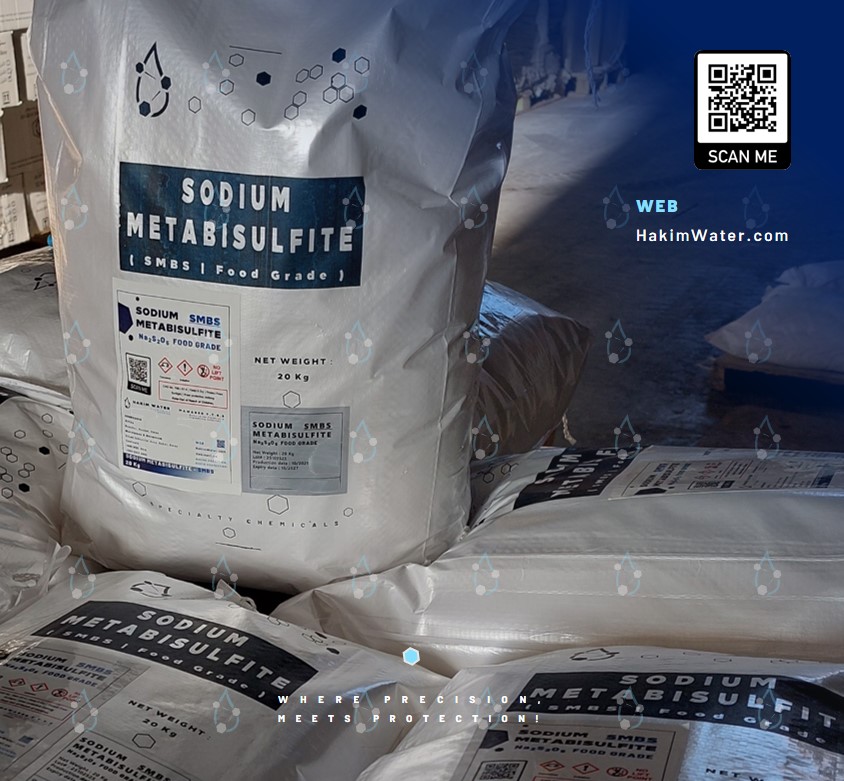

Sodium Metabisulfite (SMBS) in Reverse Osmosis Systems
Introduction
Reverse Osmosis (RO) membranes require strict protection against oxidizing agents such as free chlorine, chloramines, and dissolved oxygen. sulfite‑based reducing agents, particularly Sodium Metabisulfite (SMBS), play a critical role in RO pretreatment, membrane preservation, and system sanitization.
In Oman’s desalination‑dominated water sector—especially in Muscat, Sohar, Duqm, and Salalah—the correct selection and quality of SMBS directly impact membrane lifespan, operating cost, and system reliability.
Chemical Behavior of Sodium Metabisulfite in RO Feed Water
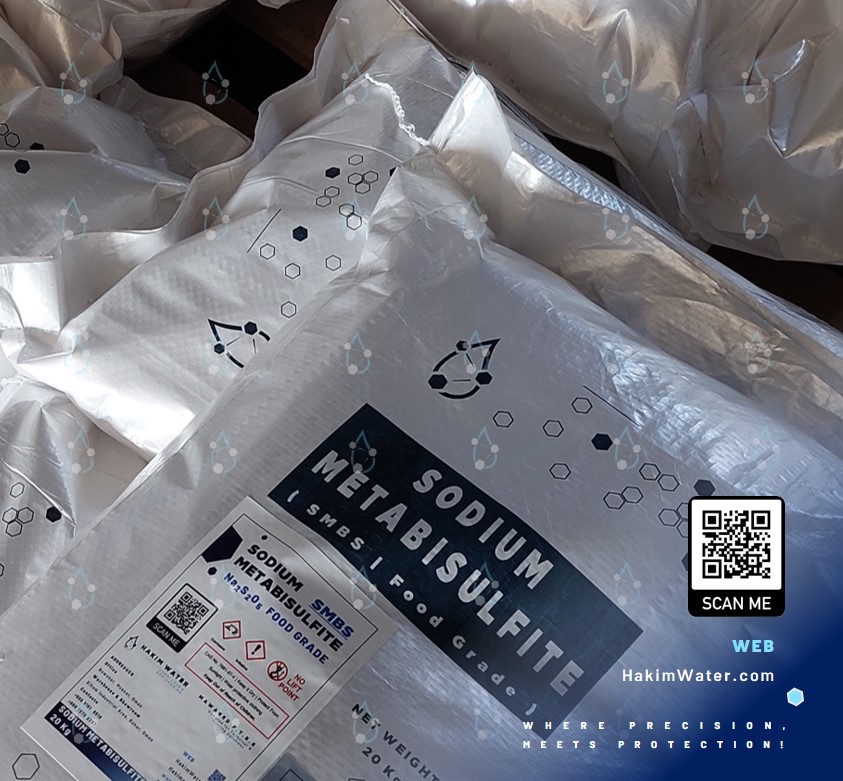
From a chemical engineering standpoint, SMBS acts as a precursor to the active reducing species. Upon dissolution:
Na₂S₂O₅ + H₂O → 2 NaHSO₃
The resulting bisulfite ions (HSO₃⁻) are responsible for fast and efficient redox reactions with oxidants. This chemistry is pH‑dependent and well‑suited for typical RO feed water conditions (pH 5.5–8).
Key Reaction Mechanisms Relevant to RO Systems
1. Free Chlorine Neutralization
Sulfites react rapidly and irreversibly with free chlorine :
HSO₃⁻ + HOCl → HSO₄⁻ + Cl⁻
✅ Engineering impact:
- Eliminates oxidative stress on polyamide TFC membranes
- Prevents loss of salt rejection and permeability
- Allows safe operation even with chlorinated municipal feed water
2. Chloramine Reduction
Chloramines are more stable and difficult to remove using physical pretreatment alone. SMBS provides a reliable chemical pathway:
NH₂Cl + HSO₃⁻ → NH₃ + Cl⁻ + HSO₄⁻
✅ Engineering impact:
- Complete chloramine removal before RO membranes
- Reduced risk of long‑term membrane degradation
3. Oxygen Scavenging and Redox Control
During RO shutdowns and membrane preservation:
2 HSO₃⁻ + O₂ → 2 HSO₄⁻
✅ Engineering impact:
- Maintains low ORP conditions
- Suppresses aerobic microbial growth
- Prevents oxidative aging of membranes
Role of SMBS in RO Membrane Preservation
RO membranes are commonly preserved using 0.5–1.0 wt% SMBS solutions during extended shutdowns. This practice, supported by membrane manufacturers , ensures:
- Chemical stability of membrane surfaces
- Biofouling prevention during idle periods
- Safe recommissioning of RO systems
Hakim Water – Trusted Sodium Metabisulfite Supplier Across Oman
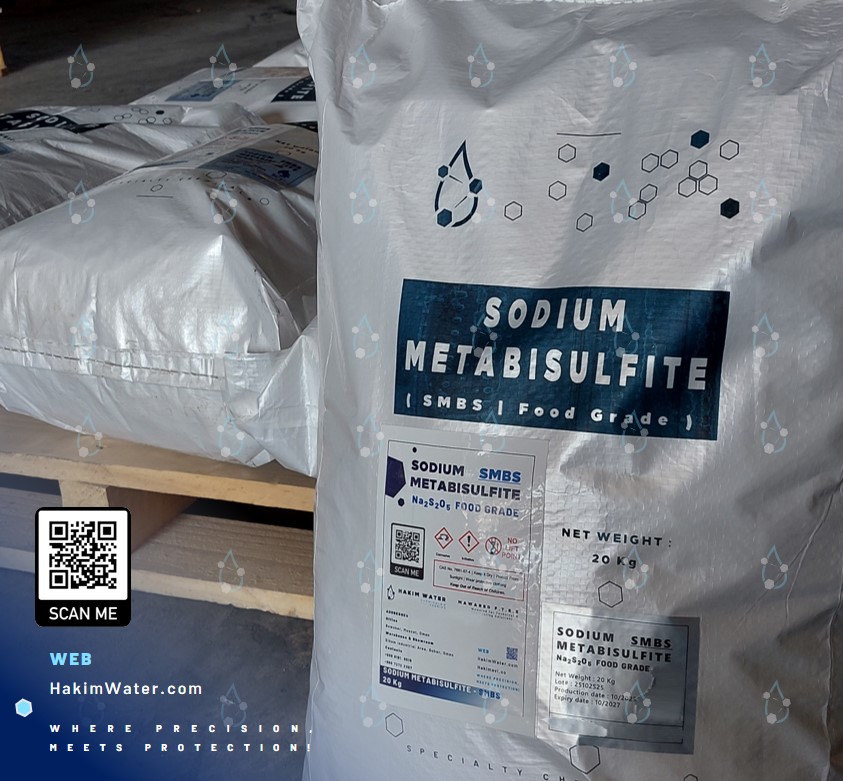
Hakim Water is a leading manufacturer and supplier of Sodium Metabisulfite in Oman, delivering RO‑grade SMBS to water treatment and desalination projects across:
- Muscat – Municipal and industrial RO plants
- Sohar – Industrial zones and refinery water systems
- Duqm – Large‑scale desalination and infrastructure projects
- Salalah – Coastal desalination and tourism‑related water treatment
Hakim Water Product Capabilities
- ✅ High‑purity Sodium Metabisulfite with consistent reducing capacity
- ✅ Optimized for continuous RO dechlorination and preservation
- ✅ Reliable local supply chain within Oman
- ✅ Technical support for dosing, ORP control, and system optimization
Hakim’s local manufacturing and distribution capabilities ensure fast delivery, consistent quality, and compliance with international RO membrane guidelines.
Conclusion
From a chemical engineering perspective, Sodium Metabisulfite is an essential reactive chemical in RO systems—not only for dechlorination, but also for oxygen scavenging and membrane preservation. Its effectiveness depends on reaction kinetics, dosing control, and product quality.
By using Hakim Water’s Sodium Metabisulfite in Oman, RO operators in Muscat, Sohar, Duqm, and Salalah can ensure reliable membrane protection, lower operating costs, and long‑term system performance.
Frequently Asked Questions (FAQ)
1. Why is Sodium Metabisulfite used instead of activated carbon in RO systems?
Activated carbon removes chlorine physically, while SMBS removes oxidants chemically and instantly. SMBS is especially effective against chloramines and provides precise control in high‑risk RO applications.
2. Can excessive SMBS dosing harm RO systems?
Yes. Overdosing may increase sulfate concentration and promote biofouling if not controlled. Proper stoichiometric dosing and ORP monitoring are essential.
3. Is Hakim Water’s SMBS suitable for membrane preservation?
Yes. Hakim’s Sodium Metabisulfite meets the purity and stability requirements for RO membrane preservation and lay‑up solutions.
4. In which Omani cities does Hakim Water supply SMBS?
Hakim Water supplies Sodium Metabisulfite across Muscat, Sohar, Duqm, and Salalah, supporting municipal, industrial, and desalination RO plants.
5. What is the typical SMBS dosage for dechlorination?
Generally, 2–3 ppm of SMBS per 1 ppm of free chlorine, depending on water chemistry and system design.